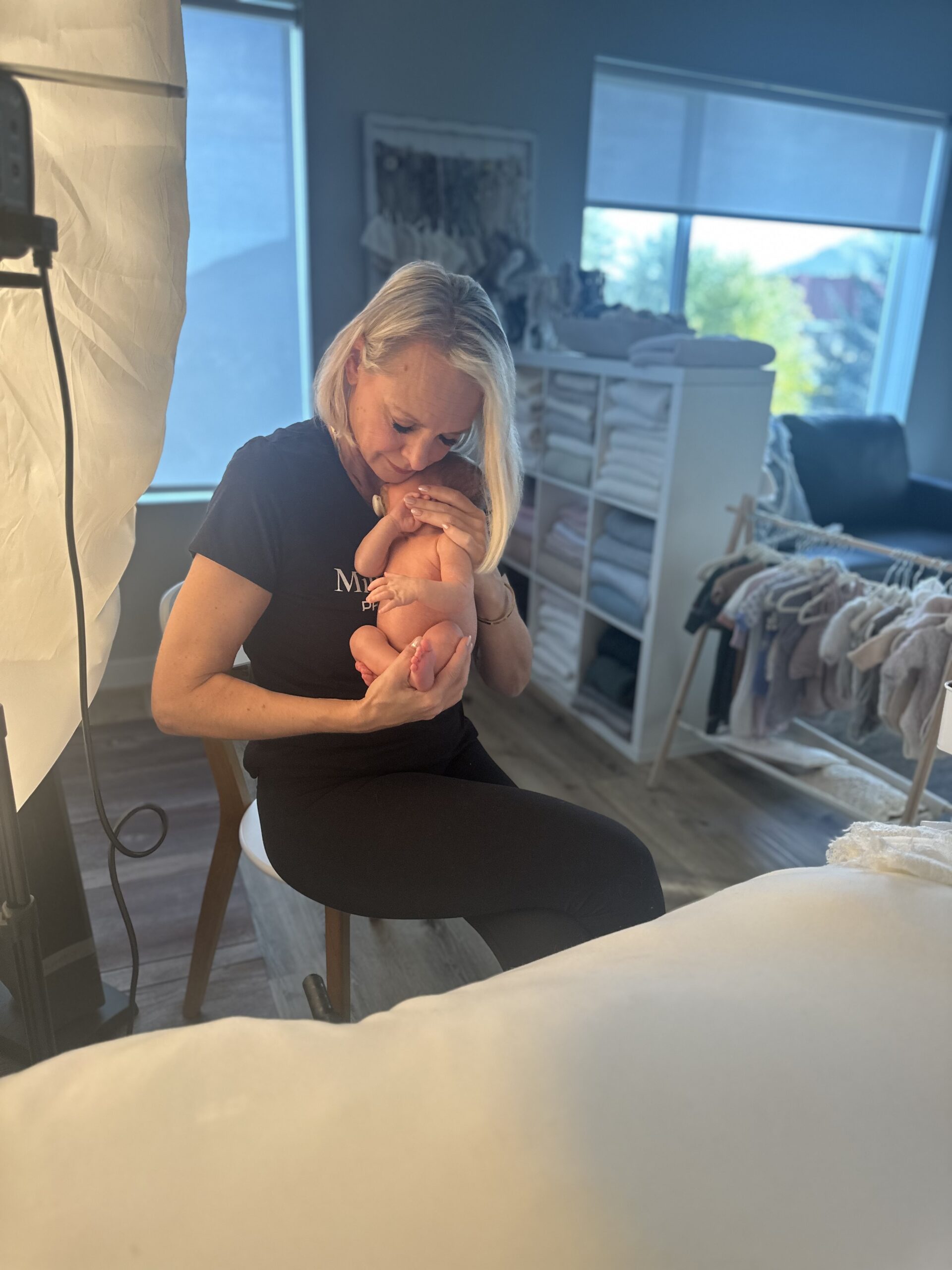
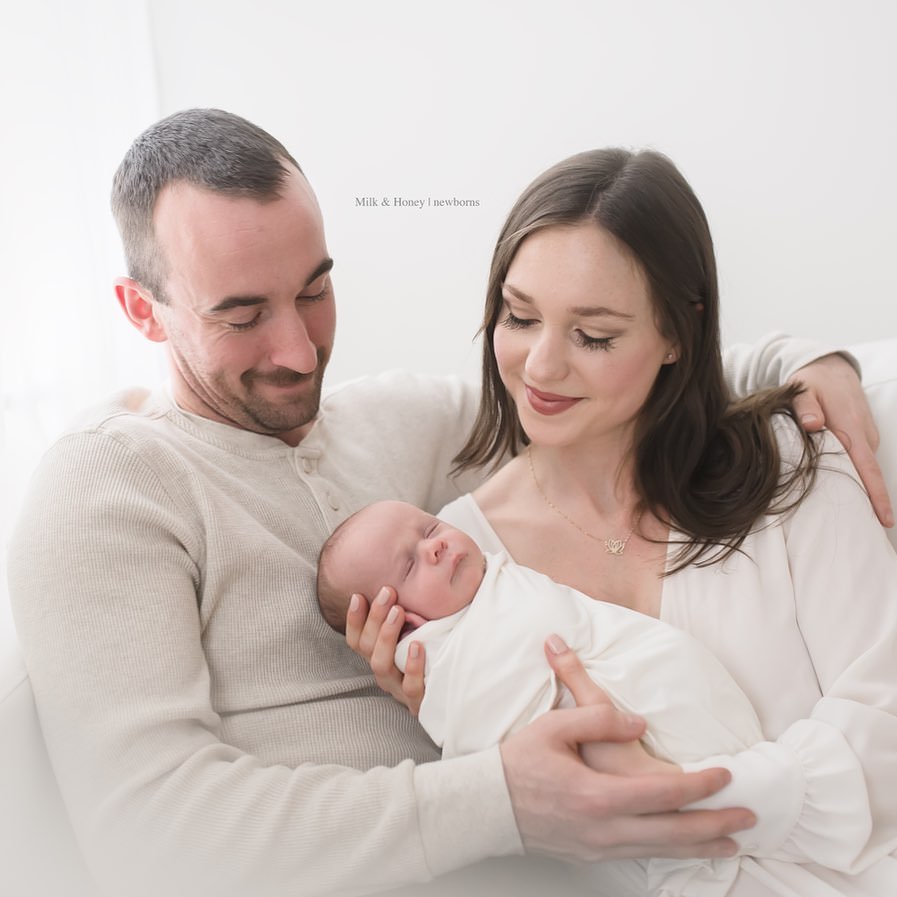
What happens when a self-proclaimed perfectionist swaps carefully posed newborn photography for the chaos of in-home lifestyle sessions? For Natasha Sewell, it meant rethinking everything she knew about photography.
In this episode, Natasha tells the story of how she transitioned from posed newborn photography to in-home lifestyle sessions. She shares how she prepares for the unexpected, helps clients feel at ease, and ensures every session flows naturally.

Plus, she’s breaking down the biggest mistakes photographers make in client communication, how to use your website to bring in more business, and the lesson she wishes every photographer would learn earlier in their career.
What’s in this episode:
- [02:00] Why and how Natasha Sewell transitioned from newborn to in-home lifestyle photography
- [05:36] How Natasha plans for the unexpected and prepares her clients ahead of time in each of her in-home sessions
- [10:15] How Natasha helps her client to feel comfortable and creates opportunities for natural moments to occur
- [11:30] How photographers can use their websites to create more business and client opportunities
- [16:55] Some of the biggest mistakes Natasha sees other photographers making in their client communication
- [18:55] Personal projects and other ways that Natasha reinvigorates her creativity
- [26:15] One lesson that Natasha wishes photographers would learn earlier in their careers
- [30:22] Natasha’s lightning round
If you want to communicate and create stronger connections with your clients, this episode with Natasha is for you!
SUBSCRIBE: Apple Podcasts | Spotify
Resources Mentioned
Meet Natasha Sewell
Natasha launched her photography business in 2013 at 41 after being a stay-at-home mom and before that a teacher. In 2019 with a big move, she decided to make a huge change and switched from posed newborns to in-home newborn and family photography. A move that has challenged her and helped her grow creatively. She combined her two of her passions photography and teaching and started offering mentoring and photography education 2+ years ago.
Connect with Natasha
Did this episode with Natasha get you thinking on how you can communicate better with clients? Check out this episode From Scrubs to Shutter : Balancing Nursing, Photography, and Passion with Shannon McTighe that shares how another photographer started their career!
Transcript
Natasha: [00:00:00] I have my clients give me a tour the minute I get there, and I have them show me literally every room. There have been times I have used a hallway for the majority of a session. There have been times I’ve used a laundry room, or a kitchen, or spaces that they aren’t necessarily prepared for me to use, but because it has the most gorgeous light.
Hey friend, welcome to the Art in Soul
Lisa: Show.
I’m your host, Lisa DiGeso, a mom, a photographer, and entrepreneur. Tune in here for pep talks, conversations, and advice on photography, creativity, mindset, business, life, and that messy in between. This is the place where you can go when you need a boost of encouragement, a kick in the pants, and inspiration to pick up your camera.
This is the art and soul show. Hello, my beautiful friends. Welcome back to the show today. I am hanging out with Natasha Sewell. Now, Natasha launched her photography [00:01:00] business way back in 2013 at 41, after being a stay at home mom, and before that, a teacher. In 2019, with a big move, she decided to make a huge change and switch from pose newborns to in home newborn and family photography, a move that has challenged her and helped her grow creatively.
She combined her two passions, photography and teaching, and started offering mentoring and photography education. Two and a half years ago. We were just chatting before we got started and Natasha has been a long time Milky Way student, which just like tickles my mama bear heart because I love so much watching our students grow and come back and become educators.
It is just such a full circle moment for me. So I’m so excited to welcome Natasha to the show today. So welcome.
Natasha: Well, thank you so much. This is such a full circle moment for me because I have done the Milky Way retreats and been part of it for so long that this is just a dream for me. So thank you for having me.
I [00:02:00] love that. I
Lisa: love that. So I want to circle to the point that you made a major shift in 2019. You were doing pose newborn photography and then you switched to in home lifestyle photography. So I want to know what prompted that change and what was the hardest part about making that transition?
Natasha: So, what prompted the change was, I was a military spouse for 24 years, and we were very fortunate to be in the same location for a long time.
So, I was able to start my business in North Carolina and grow it there, but my husband retired from the military and moved to Washington, D. C. to start a new job there, and so I needed to figure out how I could bring my business to D. C. Studio space is very expensive in DC, real estate’s really expensive, and I just didn’t see that as an option, especially sort of starting over.
And so I, you know, [00:03:00] considered doing Pose Newborns in people’s homes, which sounded like not funny to me. Right? I did that once. Yes. I did that once. And dragging all the stuff and the lighting and all the things, I was like, oh, this could be a nightmare. So no. I actually considered just closing my business.
Because I wasn’t sure if I could actually make the switch and make it successfully. And I, you know, after considering all the options, I decided, well, let’s give in home photography a try and see if I like it. So I hired a mentor and I went and shot an in home session. And I was hooked. So that is how it all sort of came about.
But it was a process for sure.
Lisa: So who did you hire as a mentor? Sabrina Gephardt. Oh, yeah.
Natasha: Yes. So I had followed her for years and years and years. She is now a dear friend. Oh, I love her. And Still a mentor to me. Yeah. So I went to Texas and shot an in [00:04:00] home session with her and she really helped me figure out how to make this transition and make it successful.
Yeah. I love that.
Lisa: I think that coming, cause I am such a posed, posed newborn photographer that I’ve tried to sort of incorporate a little bit more of baby led posing, just where I’ve got just, you know, this round bean bag, just no backdrop, just. Baby, me, bag, and maybe a wrap and trying to do a little bit more baby like it is such a different Experience?
For sure. Just right? So how did you train yourself from going from that mentality of posed, everything’s perfect, we’ve got flat fingers and everything is polished, to that like, I’m going to let things just unfold as they are?
Natasha: I would say that was the most challenging thing for me. I am a perfectionist through and through, so I think that’s what drew me to pose newborn photography to begin with.
Yeah. Was being able to perfect that pose and know that it was perfect and it was such an accomplishment. Yeah. So embracing the chaos [00:05:00] of an in home session took some of me getting out of my comfort zone for sure because there is no perfection. Yeah. In an in home session, maybe you can get perfect lighting, which is amazing when you walk in those homes that just have windows everywhere and you’re like, yes, this is the best, but it’s just.
Unpredictable. Yeah. So I, I think that was the hardest thing for me was just trying to embrace it and let it just be what it was and not trying to control every last thing, which is my nature. Oh girl, you preaching to the choir there.
Lisa: So I think, you know, with in home sessions, they all kind of sort of come with unique challenges because you are walking into this unknown situation.
So do you find that you go ahead of time? just to alleviate these fears in your mind, just to check out the location first, or do you walk in there going, I know I can do this. I’ll figure it out.
Natasha: I walk in there [00:06:00] saying, I know I can do this. I love that. Now, I do do a tiny bit of investigating before. Some may call it stalking, but, you know, I call it investigating.
And I do look up their address and go on real estate sites, just, and I’m really just looking for window placement. Obviously. This isn’t when they own the home, furniture may be different. Honestly, sometimes I’ve walked in and they’ve completely renovated and it’s totally different. But generally speaking, people are not moving windows.
So, I can do a little investigation there and then I use the Sunseekers app. Yeah, which is just an amazing tool for photographers. And I plug that in, their address in that, so that I can see what windows. The light’s going to be coming in. And that’s sort of what, what I do before every session, just to have a little more confidence as to what I’m going to do during the session.
If a client is very concerned about what the light is like in their home, I will have them send me pictures just [00:07:00] to assure them. I know I can find the light, but there are those clients who are like, we live in a dark hole. Yeah. And in DC, I shoot in a ton of row homes. Yes. I was going to say, I know there’s lots of row homes there.
Tons. And so the light can be tricky in those. Generally speaking, we typically shoot on like second and third floors because the higher up you get, the more light you get in the window. So yeah, it, it seems to work, but doing a little light stocking, yeah.
Lisa: It’s the way to go. I love that. Well, I, I do that for my girlfriends when my, a number of friends that have just gone through recent divorces and my favorite thing to do is investigate people.
Yes. I’m like, I can find the dirt on anybody.
Natasha: Oh my goodness. My husband says, you should have been a private investigator. Oh, I can do some good digging. Oh, it’s so fun. It’s super fun. Thank you, internet, for making that possible.
Lisa: I know, my nosiness comes in handy.
Natasha: Yes, totally. I, I, I wholeheartedly agree with you on that.
So fun.
Lisa: Now, with in home sessions, it can be really stressful for families at times if they’re [00:08:00] thinking, you know what, we just had a baby, the house is a disaster, or, you know, my house is not Instagram picture perfect. So what do you do to sort of alleviate those fears from your clients so they have a stress free experience?
Natasha: So communication, preparation are key, and they’re key with every photography session. But within home, I send them a prep guide. I do a phone consult before the session. So that they get to know me too. They’re welcoming me in their home. It’s a very personal space, and I want to make sure that they are comfortable with that, and that they know me, and know my whole philosophy, and how everything works.
Because education is power. And so I want confident clients going into it and I really encourage Both adults, if there are two adults that are going to be part of the session, to read the prep guide. That is one of my biggest things because it makes a big difference if they both are on the same page going in and you don’t have this dad that’s like smiling big and staring at the camera the whole [00:09:00] time and I’m like, no, look at your family.
Look at your family. Yeah. So it does help immensely if everybody’s on the same page. Yeah.
Lisa: Now. A lot of photographers really struggle with that lighting aspect in this home environment. So what advice do you have, beyond blighted stocking, to make use of any available light that they could have there?
Natasha: I have my clients give me a tour the minute I get there.
Perfect. And I have them show me literally every room. There have been times I have used a hallway for the majority of a session. There have been times I’ve used a laundry room, or a kitchen, or spaces that they aren’t necessarily prepared for me to use but because it has the most gorgeous light. So in the phone consult, I always tell them, listen, you don’t need to do, have like a cleaning crew come in and clean your whole home because the room do you think we might be using?
We might not be using. Yeah. So just do a very light, tidy, and I will move things if I need to, to ensure that they are picture ready. Yeah. [00:10:00] But that tour is so important to really finding the light. Because, yeah, unexpected places sometimes.
Lisa: Yeah, it’s so true. I know sometimes I go to girlfriend’s house and I’m like, oh my god.
Natasha: Yes. Yes. Don’t we see that everywhere we go? I’m always like, oh, this is the best light. Yes.
Lisa: Totally.
Natasha: I love it.
Lisa: Now, lifestyle photography really is all about capturing those real moments. So how do you encourage those natural moments to occur and sort of unfold in a session?
Natasha: So one of the biggest things my clients ask is, or tell me, that they are super awkward in front of the camera.
Right? I mean we all get that. Right, and to be honest, I’m awkward in front of the camera. I get it. You’re awkward in front of everything. And so I, I I reassure them that I am going to give them direction, so I do pose, I put them in the best light, I put them at the most flattering angle, I tell them what to do with their hands, all of those things, but then I talk to them, and we sort of let things unfold, [00:11:00] and that is where the magic happens, is in those unexpected moments.
Now when you throw a toddler in there, you get a lot of unexpected moments, which makes for just a more enjoyable, fun session. I talk the entire session. I mean, I feel like I’m never, there’s never a moment of quiet and that really helps with keeping people relaxed and more natural. I love that. That’s, that’s great.
Lisa: Now I’m going to switch a little bit. We’re going to have a little bit more about business. So I know in your intake form, you said you’re passionate about using your website as a tool to improve client experience and to save time. So what are some must haves photographers should include on their site?
And I know that you might have a freebie too.
Natasha: I do have a freebie. So I think it’s so important to have sort of All of your resources in one place and your website is the perfect place to do that. Your website should be almost an encyclopedia for your sessions. And [00:12:00] so not just showing off your beautiful photographs, having a blog, which you should have a blog if you don’t have one.
I know all photographers are like, I know, I hate writing, I hate, it’s not dead. It is so important. So have that blog and you can include resources in the blog for sure, but also including things like having your session prep guide on your website, having your pricing, even if it’s on a hidden page and you just have a general pricing page.
on your website to send clients to. Those are some of the things that are super important and the reason it’s important is first of all it’s super easy for you to update your website. Yeah. Much easier than if you have a PDF and you have to go into Canva or whatever you use for the PDF and change all the things.
If you have one thing you need to update, Oh my goodness, it’ll take you two seconds to do it on your website. And then you hit publish and it’s live. So so much easier to do it that way. Secondly, it helps with SEO. I think that that, people don’t realize that, but the more hits [00:13:00] you’re getting to your website, the better it is for your SEO.
So if you are sending clients constantly to your website for things, that is, that is Amazing. Yeah. I also have what I call a video library on my website and it goes through, it has short videos, they’re long videos, but I go through what happens after your session, how the ordering process works. I also have a video of me literally holding up products and talking about why they’re my favorite products and why I offer them to my clients, but I send that to my clients multiple times throughout the process.
So that it’s just an education tool. Yeah. So I do have a freebie. It’s to elevate your client experience using your website, and it walks you through all of these pages. There are four pages that I think every photographer needs, and it walks you through what you need to have on them, and how to set them up, and all of those things.
But I think it’s such an underrated [00:14:00] tool. Yeah. And that we just think it’s for inquiry, and it’s not. It’s for so, you can use your website for it. Everything.
Lisa: I love that. Using your, your website as an encyclopedia. I absolutely adore that. ’cause I’m thinking about mine ’cause I recently, well it’s funny ’cause I got hacked in, oh no.
2022 and I was redirecting my milk and hindsight to like a Cialis website and I was like, well I need to take a ci. I know. I need to take a sabbatical anyway. So I’m like, well, once you get that Cialis under control, why don’t you give me a call?
Natasha: Oh
Lisa: my goodness. That’s awesome. So then I rebuilt my entire website and I figured out how to use show it, but I’m also realizing how underutilized my website really is.
Like I’ve got it kind of bare bones. I even pulled the pricing off there. So. It’s interesting, like I’m kind of just navigating getting back into photography, but I love that you mentioned this because there’s so many things I know our listeners can take away and I personally can take away to add to my site too, [00:15:00] so.
So how do you send your clients pricing? Is it in a PDF? Honestly, right now, it’s just an email.
Natasha: Just an email. Great. I mean, I think that’s great. I’m just at bare bones right now and I’m like, I don’t know what I’m doing right now. But that’s great. I mean, it’s great. But I, do you think having a pricing page and you can do a hidden page or a page where people have to have the URL.
I love that. And just redirecting them there. Yes. Makes life easy. Yes. I know, and then if you change your pricing. Exactly. Or change your, your anything, collections, anything you’re doing, it’s just so easy to update.
Lisa: I love that. I’m gonna do that this afternoon. Yay. This is brilliant. I love this. Because I’ve been, I, it’s funny because I’ve had a few inquiries.
I’ve had a lot of inquiring ghosts lately
Natasha: and
Lisa: I’m having that like, oh my gosh, I’m like, what am I doing? I’m just sending them an email with my pricing. You know better, girl. You know. Are you actually trying to put clients? Like, what’s happening here?
Natasha: Right? Yeah, well, I mean, you’re giving them the information, but you could make it prettier.
Exactly. I know how to do that.
Lisa: Yes. So funny. For sure. I love that. Now, I love, I’m going to circle back to, you talked a little bit about getting [00:16:00] on a phone call with clients prior, about that, I mean, that is really a great way to just set clear expectations and boundaries with clients. Now, if someone is a little bit nervous about getting on the phone with someone, what is your advice just to like rip the bandaid and make that part of your process?
Natasha: I tell them that it’s. That it’s required Yeah. Before a session. Yeah. Um, and, and I always say it’s just much easier for me to answer questions as you ask them, rather than us going back and forth via email 600 times. Yeah. Right? Yeah. Because you can knock out a 10 minute conversation, answer everybody’s questions, and so I make it a requirement.
They have to get on a phone call with me and I tell them it could be five, 10 minutes. Yeah. We don’t need to talk for an hour. Yeah. I love that. Yeah, yeah. But I just think it’s so important. I have always done it that way. I’ve always spoken to, when I did Pose Newborns, I did the same thing. And I just really want people to be comfortable with me and know that we’re a good fit too.
Lisa: Yeah. I love that. I love that. [00:17:00] So, what common mistakes do you see photographers making when it comes to their client communication?
Natasha: I think the biggest thing people do is they are really good leading up to the session. Yeah. And then after the session, Yeah. There’s nothing. Yeah. Then they send the gallery and there’s nothing.
So we, in some ways, ghost our clients. Yeah. Which is such a missed opportunity because educating our clients, as I said, I have that video resource page that I send them, you know, this is what happens next. Yeah. Educating them, giving them a timeline, letting them know what happens next. Yeah. Just empowers them.
Yeah. And also. It makes your inbox empty because they’re not constantly harassing you. I might be transferring emails. Oh, it’s gonna be ready. I’m waiting. You know, I never get emails like that. Never ever. And then I think it’s so important to keep that conversation going after the session through emails, through your newsletter, through whatever.
But just. Have them know that they’re part of your [00:18:00] photography family now, you know, and so nurturing those relationships is so important. My goal is really to have raving clients that just love working with me and they share about my business to all our friends.
Lisa: I love that. Do you do family sessions and older sessions as well?
I do. I
Natasha: absolutely do. I do pretty much all in home. However, to my existing clients as a perk, I do offer outdoor sessions in the fall. But it’s only to clients I’ve worked with before.
Lisa: Yeah. I love it. So your retention must be really high because you’ve developed that relationship with them and then they know, like, trust you.
I
Natasha: love that. They do. And, and, and they’re also excited because It’s, it’s something different than what I typically offer. So they’re like, yes, we got on the special list, you know, so it’s a perk. I love that. I love that.
Lisa: All right. So on your intake form, you mentioned personal projects. They can reinvigorate creativity, business, and your personal growth.
So can you maybe share an example of a project that is [00:19:00] deeply impacted you?
Natasha: Absolutely. So my projects, 10. to be around motherhood. I’m a mom of three and it’s just something near and dear to my heart. So the project, the most recent project I did was called The Blur of Motherhood and it was all black and white imagery and there was some sort of motion blur in the photos or they were slightly out of focus or something that was just a little blurry.
And I did a model call and had moms apply. And then I chose different moms, I went in the home, and just, I, I, I figured out in my head how I wanted to do the blur with depending on what ages their kids were, whether it was movement of the kids or, you know, those, when you have a baby, just everything feels like a blur.
Yeah. I tried out different things that I don’t do in my normal sessions, different creative things. And I did do some [00:20:00] film with it, which was kind of fun and not necessarily in my comfort zone, but it just sparked creativity. It is a project that I’m. super passionate about because it had to do with moms and just how motherhood is a blur.
It is just a complete blur, especially when you have littles. So I’m a big proponent of doing personal projects to spark creativity. I always do them usually in January, February when things are slow and you’re also maybe a little burnt out. So it’s a great way to reinvigorate yourself and get excited about your business again.
Lisa: I love that.
Natasha: Have you played with a Lensbaby at all? I have not. Me either. And I would love to. But I’m, I would love to. I think that would be just super fun.
Lisa: I did a, a series a few years ago called The Truth and Grace of Motherhood. Oh. And it was, I actually had it displayed at a, a local gallery for an event and it was It did not look like my work.
It was like something that was completely not my regular, very soft, [00:21:00] pretty milk and honey. It was edgy. It was like skin. It was like more lifestyle. It was so fun to do that. Yes. It’s fun to try
Natasha: something different, right? It really is. And I think that we all get in a rut, you know, and so trying different things is fun.
I also sometimes incorporate At the end of a session, I’ll do a couple shots just for me and do something a little bit different, just to keep that creativity flowing.
Lisa: And I don’t know if this is the sad part, but I actually didn’t share really any of the photos, I didn’t, I was almost like, this is so off brand, I am almost like, do I, what do I do with this, do I share this with the world?
You do, you
Natasha: do a blog post or something about it and what was the story behind it. And why it meant so much to you and how it sparked your creativity. Absolutely, you should at a minimum do a blog post. I love that and maybe I’ll do it again.
Lisa: I feel because it’s funny because now I’m like, it’s been like six years.
I [00:22:00] can’t, I can’t go back and read about something six years ago. I have to do it. You could.
Natasha: You could absolutely share. Hey, this is, you know, a way I. I love it. But you should do it again. Okay. Challenge accepted. It sounds fabulous.
Lisa: Because I actually just signed up for blog on show it too, so I got to get that rolling too.
Natasha: You get it
Lisa: rolling.
So how, oh, say, what advice do you have for photographers that maybe are just feeling stuck in a creative rut? I know we talked about personal projects. Is there anything else that you can think of that has helped you?
Natasha: Yeah. Well, I would say trying different things out at the end of a session. Once you know you’ve gotten everything you need for the client.
It’s taking the 5 or 10 minutes at the end of your session to try something else out. And I always say to the clients, I’m like, listen, we’re going to try something. This could be a complete fail. And I’ve never once had someone say to me, oh, we don’t want to be, we don’t want to do that. Of course, they’re totally willing to.
Yeah. So it’s a great opportunity to try something different out. And I actually did [00:23:00] that with the blur at the end of some sessions just to kind of see. What direction I was going in with that and I also another project I did was calm and chaos and they were two images that one showed the calm of motherhood one showed the chaos of motherhood and Like how it can change in a split second.
And so I tried some of that out too at the end of a session but Experiment, you know, you have willing participants right there at a session So I think that’s the prime time to try that stuff out
Lisa: I love that. I think so many of us as photographers and business owners, we really struggle with balancing that creative side and that business side and sort of finding that sweet spot where we can do both without burning out.
So do you have any advice on that, on avoiding that burnout?
Natasha: Oh, that has been a journey.
Lisa: Right? I don’t know. Do any of us have this answer?
Natasha: No. We’re dreamers. We are. And I think setting boundaries is the biggest thing that I’ve done for my business [00:24:00] and for myself. I had no boundaries in the beginning. No boundaries.
I said yes to everything. I worked every weekend. I had an insane fall season and it was a lot. It was a lot. And I would You know, December would come and I’d be like, you know, and then you roll into January when things are slow and then you get panicked and the whole cycle starts again. So I really think setting boundaries.
I only do fall sessions in September and the beginning of October now. And I really only do your typical fall sessions for repeat clients. It is not offered to everyone. I try to turn my computer off at 5 p. m. every day. Try. Try. I know it’s hard. It is hard, but I really try because you would just have to set those boundaries.
So, and taking a break when you need it. Yeah. You know, I, I was coaching a one on one mentoring student recently, and she’s [00:25:00] like, Do I need to let everyone on Instagram know that I’m taking a break? I was like, No! Just take your break! Do what you need to do for you. And then just come back when you want to come back.
And you don’t have to announce you’re back. Just show up again. So I think it’s just doing things that feel right to you.
Lisa: Yeah, we don’t have to be a slave to the machine and I think that’s one thing that I’ve come to realize. I have sort of this feast and famine with, especially posting on social media, I’ll be like really good and I’ll post like every day, I’ll do real a week, I’ll like post all the time and then I’m like, actually, these get like two likes.
Is anyone out there? I don’t even know. So I’m like, you know what? I don’t feel like doing this today. And I’m not going to. I might not do it for a month.
Natasha: That’s fine. No, I totally agree. I did that, I guess in the fall, I took like, or no, it was maybe the summer, I took a huge break unintentionally. And I would post the stories every once in a while because that’s easy and no, we kind of get in creation burnout.
Lisa: Yeah.
Natasha: Yeah.
Lisa: And I think it’s important to protect our creativity. And if you’re starting to feel that, [00:26:00] don’t let it zap you.
Natasha: No. Take a step back. There’s no reason that you can’t do that. I love that.
Lisa: So what’s one lesson or mindset shift you wish more photographers would adopt earlier in their careers?
Natasha: Well, I did not do this and I so wish I did. Put blinders on, stay in your own lane, stop the comparison. You cannot compare your business to someone who has been in business 10 years when you’re just starting out. And it’s one thing to be on social media and get inspiration. That’s a great thing. But when you start feeling yourself feeling bad about the work you’re looking at from other people.
You need to just unfollow for a while. And you just need to really put blinders on. I also made the mistake when I first started of following every single local photographer. I know. And then you’re like, well, wait, they’re doing this. Should I be doing this? Should I be pricing myself this way? Should I? No.
Just do what feels right to you. It’s your business. You don’t know all the other things that are going on in [00:27:00] someone’s life and business.
Lisa: Or even that twingy feeling of when they go, they go to something, like you see a client, maybe a business, Oh, yes. who has gone to someone else and you’re just like, you know that you’re not supposed to take it personally, but our little hearts.
We take everything personally. Everything personally. We can’t help it. Right? No.
Natasha: So I think it’s just really important to protect yourself and just stay in your own lane. Yeah. Blinders. 100%. 100%. And the
Lisa: thing is, is you can, you can like your local photographers, but you, you can mute them. Yes. You don’t actually have to see anything.
You can, when you want to go see something and you can go to their, their website. They’re feed. You can go over there and you can check it out, but you can actually go on there and just mute it. You can still follow. You can still be friends, but you don’t have to see it.
Natasha: Yes. And local communities are so important with, of photographers.
I love my D. C. photographer community. They’re amazing. Yeah. But you can. You can just totally mute it. Good point. Yep. And there’s nothing wrong with that. No.
Lisa: Nope. All right. So you’ve got some really exciting things coming up. You’ve [00:28:00] got the Focus Path Retreats just launched and the Client Experience Blueprint is opening again in March.
So can you maybe share what photographers can expect from these?
Natasha: Yes. So the Focus Path Retreat is something that I have just been sitting with for a long time. We recently bought House in Palm Springs. So I’m actually here right now. So I go sort of back and forth. I’m not doing work in Palm Springs, like photography work, but it’s sort of our escape from D.
C. Um, and so I was trying to think of ways I could utilize this house and I love a retreat. I love a small intimate retreat where you just get to know everyone really well and the growth you see at a retreat is so. So big. Yeah. And so I’m planning on doing different retreats, all on different topics. The first one is client experience, and I am the educator.
I love it. And we will be shooting a session and revamping everyone’s client experience, [00:29:00] and I’m hoping to get guest educators in as they move forward and have them on different topics that people are interested in. They’re very intimate, like four attendees. And it’s going to be a balance also of some downtime, some like, just, you know, getting away from your everyday life, taking a deep breath and going for a hike and doing a sound bath and just.
Taking care of yourself to fuel your business. Yeah, I love it. It’s so important. So important. And you make lifetime
Lisa: friends at these retreats. You
Natasha: do! Isn’t it amazing? Lifetime friends. And they are from all different walks of life. Yeah. And all different parts of the world. Wow. It’s just really a magical thing.
So I’m so excited that I launched this and that the first one will be in April. And then my client experience blueprint is my course, my signature course about totally revamping your client experience from like. Discovery, inquiry, [00:30:00] all the way through to what I was talking about nurturing that relationship past gallery delivery.
So it takes you through all of the steps. It’s in bite sized chunks. They’re worksheets and all these things to go along with it. And I’m really excited to launch it again in March. Awesome.
Lisa: That’s so exciting. I love that. So where can photographers go find out more and sign up for that?
Natasha: So definitely my website, npsphotography.
com, but also you can find me on Instagram. That is my preferred social media and it’s NPS Photography.
Lisa: I love that. Awesome. All right. So you ready for our lightning round? I am. Okay. What’s your go to pump up song before a session? So, I don’t have a pump up song, I meditate. Oh,
Natasha: I love that. You get in the zen zone.
I do, because in home sessions are so chaotic to begin with, I don’t need to pump myself up. I need to keep the calm. I love that. So, I do a quick, like, five minute meditation in my car before I go into a home.
Lisa: Perfect. Oh, I love that. So fun. Yeah. Now, if you could have dinner with any [00:31:00] photographer, living or past, who would it be?
So, it would be Shelly
Natasha: Langston, which everyone’s going to say, I don’t know this person. Shelly Langston. Shelly Langston photographed me as a child in Washington, D. C. She was ahead of her time. She had a studio in Georgetown, which is where I live now. She did all black and white photography. She focused on moms and children.
And her work was, is magical. And she Everyone at the end of the session would get an album. Can you imagine in the 1970s, she was that far ahead? Wow. So I have these albums from when I was a child, and it, she has really been, she’s passed away, but she has really been an inspiration to my work, and I would love, nothing would make me happier than being able to have a meal with her and pick her brain and hear more about her story.
Lisa: I love that. It’s so interesting because when I was little, we had a professional [00:32:00] photographer come to our house and my brothers and sisters were so ridiculous. Like all we have is outtakes, but I didn’t realize that a lot of that fueled how I look at photography and how I view family and what I think is funny.
And I always include some of the ridiculousness in there too, in the outtakes for my, for my clients. So I’d love that you mentioned that because I hadn’t really thought about that. Yeah, I
Natasha: think that sort of, you know, influences our businesses is what our photography journey was like as a child. And I’m so thankful to my parents to have.
put a priority on doing these photos because they are just so special to have. Yeah, I love that.
Lisa: So what’s your weirdest or funniest session moment?
Natasha: So I don’t know that this is weird or funny, but I have been bit by a dog twice in sessions. And I love dogs. I have a dog. And two sessions I’ve been bit by dogs.
Neither one. Involved in emergency room or anything like that [00:33:00] and it was just like fluke things, but yeah I just clearly they don’t maybe love me. I don’t know I photograph dogs all
Lisa: My goodness, that’s wild.
Natasha: Yes. There’s actually a clause in my contract now Yeah, that has to do with dogs because of it because I’m like, oh my goodness.
Yeah
Lisa: wild
Natasha: Favorite guilty pleasure TV show. Oh goodness. I mean so I have recently found this channel It’s called Pluto, and it’s free. It’s not really a channel, I guess it’s an app. But they have all the old shows. I am a huge true crime person, so they have murder she wrote. Oh yeah. Like the old school murder she wrote, Matlock.
And it just, I’m obsessed with it. So I would say that, because I’m a total true crime I love that. Tight person. Did you watch those when you were a kid? Yes. There you go. Yes. And I love it. But they have like love boats. Yes. Oh my gosh. All these things. It’s so inappropriate. It [00:34:00] is. It is. Oh my goodness. The things my parents used to let me watch as a kid.
I’m like, wait. You let me watch that? Anyway, so yes, but it’s Pluto TV, it’s a free app, and they have all these channels. So it is literally a Murder, She Wrote channel all day long. A Matlock channel all day long. Love book all day long. I’m obsessed with that. So I would say that’s my guilty pleasure when I’m editing, is I’ll throw on, throw on that in the background.
I love that. That’s great.
Lisa: What’s one thing people would be
Natasha: surprised to learn about you? So when I was a teenager, I had an agent and really wanted to be an actress, which is so funny now, but I did, I auditioned for things, I did some radio commercials, I did some weird videos for the Department of Defense, don’t ask, it’s like protocol videos, they were very strange.
And I also was in Broadcast News, the movie, I’m a paid extra, I’m literally a blonde blur in the background, but that is [00:35:00] what I thought I wanted to do with my life. So. Yeah, so that’s something a lot of people don’t know. That’s wild. I like that. Now, if you weren’t
Lisa: a photographer, what would you be doing?
Natasha: An interior designer, 100%. I love interiors. The only thing I don’t think I could do being an interior designer is kind of do things that other people want. Like, I have very definite ideas. You’re like, no, my idea. But I think, I just love interiors so much. And that’s, I think, has to do a little bit with doing in home photography.
Yes. Is going in these spaces and, you know, I, I love it, so. I love that. Describe your photography style in three words. So I really had to sit with this. So I think chaotic, connection, classic, chaotic. Love it. So the three C’s. Yeah. I like that. Because there’s definitely chaos in my pictures. Yeah. Control [00:36:00] chaos.
Yeah. There’s, there’s a lot of chaos. I love it. Beautiful mess. I love
Lisa: it. Yeah.
Natasha: Yeah.
Lisa: Absolutely. Now if you could photograph anywhere in the world, where would it be?
Natasha: Oh my goodness. I think I’d love to photograph in family in a home that’s been featured in like Architectural Digest. Yeah. And so it doesn’t really matter where it is.
Somewhere. I just would love, like, I look through Architectural Digest and I, my jaw drops. And so I would. love to photograph in a home that’s been featured in Architectural Digest. We’re going to manifest that. Yes, right? Wouldn’t that be so much fun? And I have to say, I love shooting in any type of home.
You do not need to have a home from Architectural Digest. It’s just a dream of mine.
Lisa: I love that. So I love to end my interviews just with this last question, and it is, what are you currently curious about or artistically curious
Natasha: about? So I really want to shoot more film, not necessarily at sessions. For a while, I was taking my film camera on [00:37:00] vacations with me.
It’s the only camera I would take. Obviously, I had my iPhone, too. But And I just love the photographs that I have taken on those vacations, so I want to just start pulling it out more and experimenting more with it. I did not ever take photography in high school or any of those things, so I never shot film ever, except for, like, the disc camera way back when.
That’s probably was the extent of my film. I don’t even think that could be considered film. So I really want to shoot more film. I just think it’s Super fun and oh, the images are so dreamy. They really are. I love that. So that’s That’s what I, that’s a plan in 2025. More film. Love it.
Lisa: Well, Natasha, thank you so much for joining me today.
It has been such a treat and a pleasure chatting with you.
Natasha: Oh my goodness. Thank you so much, Lisa. This has been amazing.
Lisa: Oh, my beautiful friends. I hope you have loved this conversation just as much as I have. I am [00:38:00] sending you so much of my light and my love today and every single day. We will see you next time.